Renal Care Infrastructure – Hôpital Régional de Bafoussam
How an empty dialysis building became a working 10-post centre for Cameroon's Western Region.
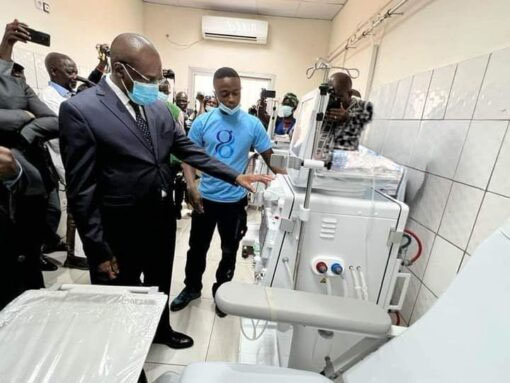
This is the story of how a building meant for dialysis, but left unequipped for years, was finally turned into life-sustaining renal care infrastructure for an entire region.
Headline outcomes:
- Ultra-modern dialysis system of 10 treatment posts
- Delivered in 3 months
- End of ~300 km journeys for dialysis
- High-quality care for the Western Region
The Challenge
Hôpital Régional de Bafoussam sits in the Western Region of Cameroon. For years, the hospital held a paradox at its heart: a building had been dedicated to a dialysis centre for the Western Region, yet it stood unequipped, unable to treat a single patient. The intention was there; the means were not.
For patients across the region diagnosed with chronic kidney disease, the consequences were severe. Hemodialysis, the treatment they depend on to survive, was not available locally. To receive it, patients had to travel on average 300 kilometres to dialysis centres in Bamenda or Buea, or relocate with their families to farther regions such as Yaoundé and Douala. For a treatment that must be repeated several times a week, indefinitely, that distance was not an inconvenience. It was a barrier between patients and survival.
In 2022, the Ministry of Public Health decided to put an end to this nightmare for the region, with a clear goal: to put in place an ultra-modern dialysis system delivering high-quality care and the best possible patient outcomes, in Bafoussam itself.
Ready to bring dialysis closer?
The Solution
The gap in Bafoussam was not the building; it was everything that makes a building a functioning dialysis centre. The solution, therefore, was to equip the existing shell with a complete, modern dialysis system, turning an empty room into a working service.
Through rigorous contract procedures, Gima-Bambot MedTech Ltd. was retained for this delicate government project: to equip the centre with an ultra-modern dialysis system, in tandem with the services needed to run it reliably.
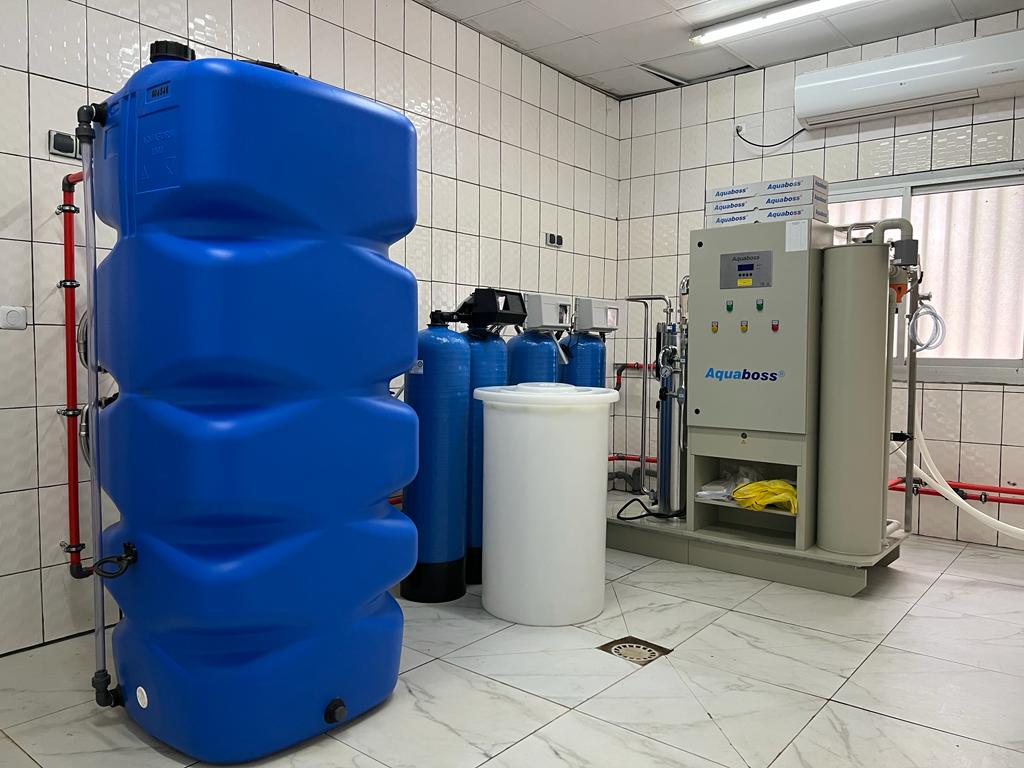
Rather than supplying machines alone, the project delivered an integrated hemodialysis solution, treatment stations, a water treatment system for the ultra-pure water dialysis requires, and the supporting services, so that the Western Region would gain not just equipment, but dependable renal care infrastructure built to last.
The Implementation
Delivered as a coordinated project deployment, the centre moved from an unequipped building to a working facility in a tightly managed sequence:
- Government tender. Following rigorous contract procedures, Gima-Bambot was retained for the project.
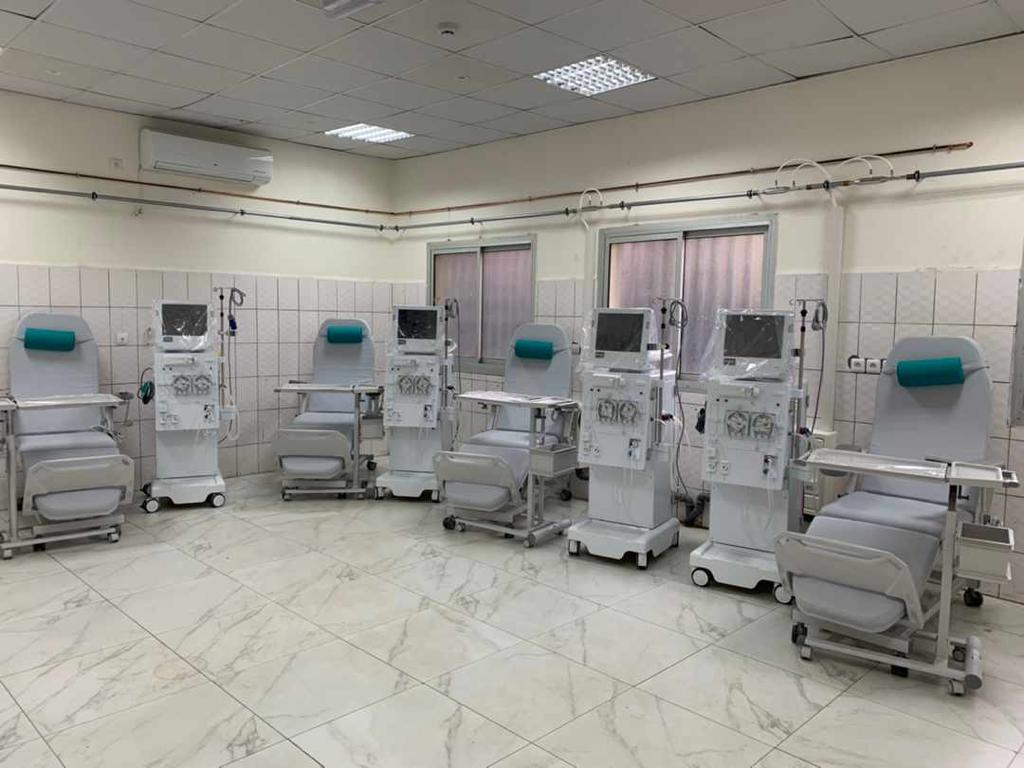
- Dialysis system installation. Gima-Bambot equipped the centre with an ultra-modern dialysis system of 10 treatment posts.
- Water treatment and technical environment. The supporting water treatment system, essential to safe dialysis, was installed and commissioned with our biomedical engineering expertise.
- Services and handover. Gima-Bambot provided the services needed to bring the centre into reliable, everyday operation, in close collaboration with government managers.
Timeline: the Ministry’s objectives were achieved in just three months.
The Results
In three months, the Ministry of Public Health’s objectives were achieved, and the Western Region now has its own dialysis centre:
- An ultra-modern dialysis centre with 10 treatment posts, in a building that had stood unequipped.
- An end to ~300 km journeys, with dialysis now available locally in Bafoussam.
- High-quality care delivered locally, in line with the Ministry’s goal of the best possible patient outcomes.
- A functioning public good for the Western Region, built through genuine collaboration.
- [confirm: additional metric, e.g. patients treated per week / sessions per month since opening]
For a region whose dialysis building had never treated a patient, these results represent a fundamental change in access to care.
Ready to bring dialysis closer?
The Impact
The deepest impact is measured in journeys no longer taken and families no longer uprooted. For patients living with chronic kidney disease in the Western Region, the new centre means life-sustaining treatment close to home, without the exhausting, costly and repeated travel to Bamenda, Buea, Yaoundé or Douala. Many patients who once had to relocate can now remain with their families while receiving the care they need.
For the region’s health system, the centre finally activates an asset that had long stood idle, and demonstrates what a focused public-sector investment, led by the Ministry of Public Health, can achieve when paired with the right delivery partner. The spirit of the project, co-labour, joint efforts and shared ownership of a public good, is exactly what makes such infrastructure endure.
By turning an empty building into a working dialysis centre in just three months, this project illustrates how the right partnership can extend essential care to underserved regions, and offers a replicable model for expanding dialysis access across Cameroon and the wider CEMAC sub-region.
This is one of several renal care projects through which Gima-Bambot is transforming healthcare across Africa, alongside the new centre at Hôpital Régional de Ngaoundéré, the extension at Hôpital Général de Douala and capacity building at Maroua.
Project overview
Ready to bring dialysis closer?
No one should travel hundreds of kilometres for care that can't wait. Let's build a hemodialysis centre designed around your region, from construction and equipment to lasting reliability.